Voice AI Authentication
Authentication customers with conversational AI by asking for the personal information on the call.
What is it?
As we transition from input-based to spoken Interactive Voice Response (IVR) on the Optus hotline (133 937), we leveraged Voice AI to greet customers, capture intent, and authenticate their identity.
My contribution
Conversation design of how the AI should respond to customers and collect information
Service design of the frontline agents to customer experience
Company
Optus
Role
Conversation Designer in Digital AI team
Timeframe
Apr - Jun 2022
Manual authentication is time -consuming
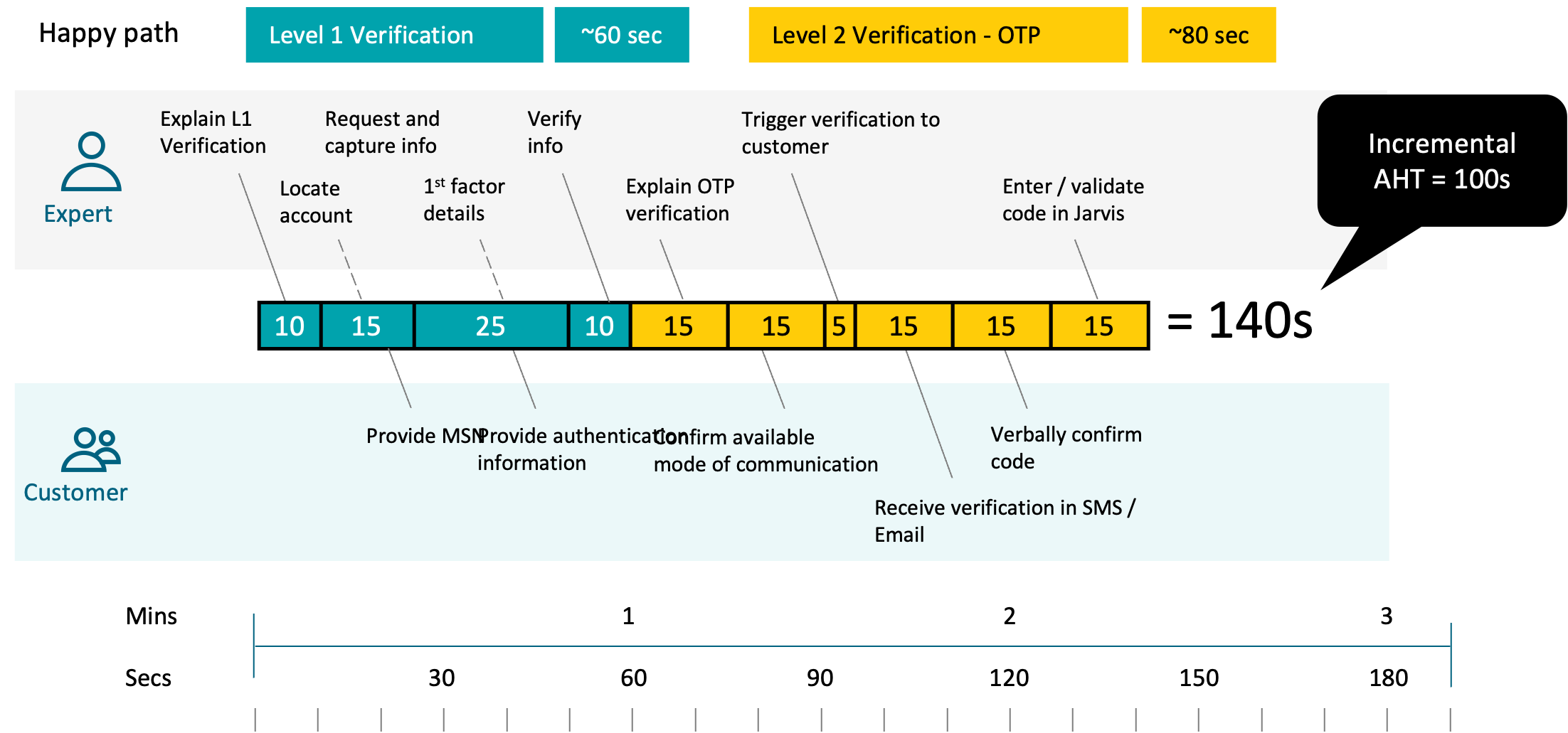
Whenever customers call Optus, our frontline experts takes up to 140 seconds to authenticate them before opening up their account to discuss their questions.
Now that the Australian Communications and Media Authority (ACMA) introduces multi-factor authentication (MFA), I explored how we might minimise friction in the current process and reduce frontline's time when authenticating.
Start by calling Optus
I attempted to understand the current customer experience by stepping into the users' shoe and called Optus. I also looked into other companies to see what's the market trend is now with Voice AI authentication, e.g. ANZ, Telstra, Centrelink.
As the strategic design consider the frontline agents' experience, I volunteered to sit with 5 contact centre managers, so I could understand how the they authenticate customers on call and what steps are involved.
Goal = reduce call time
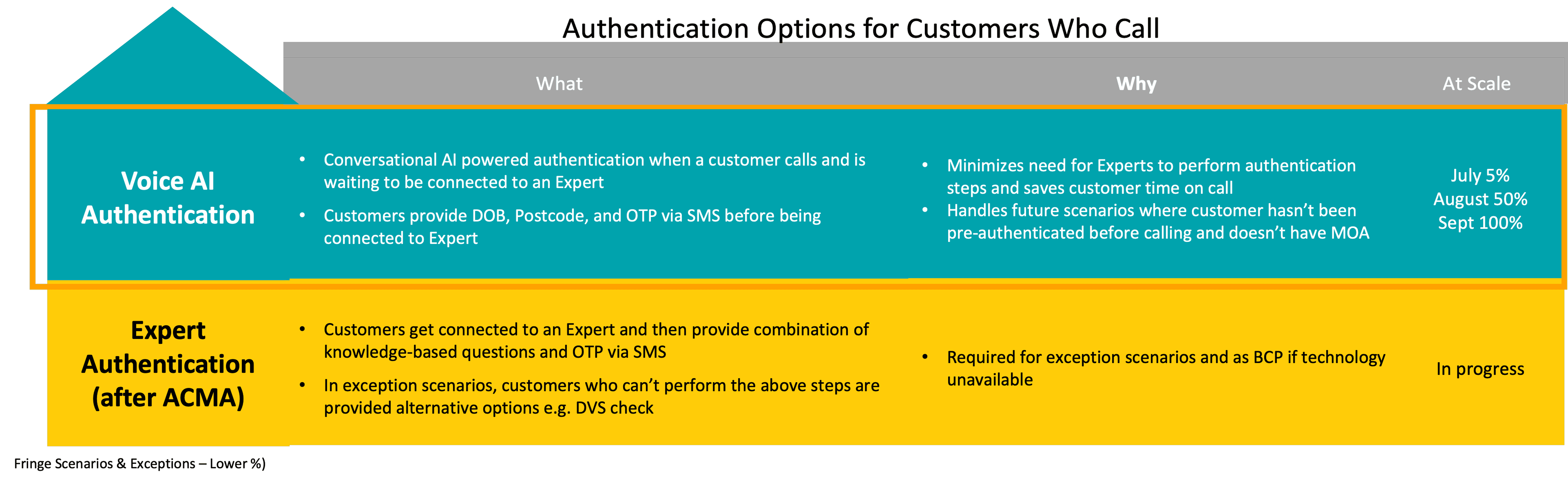
The main challenge is that we have to work around compliance constraints, but I kept the core design challenge in mind — reduce the authentication time while balancing security. That's why I explored utilising "down time" to authenticate users, i.e. authenticate while they are put on hold getting connected to the frontline expert; and showing the AI collected information to our experts in the dashboard so there's no repeated questions.
Testing my assumptions
I assumed that numerical information (date of birth and postcode) are easier for customers to provide and for the AI to understand, and that customers are more comfortable with AI authentication > inputting in IVR. Very interestingly, we learnt that matured customers (>70 years old) are more likely to use speaker phone, which meant we have to ensure AI can capture speakerphone responses accurately.
Direct instructions
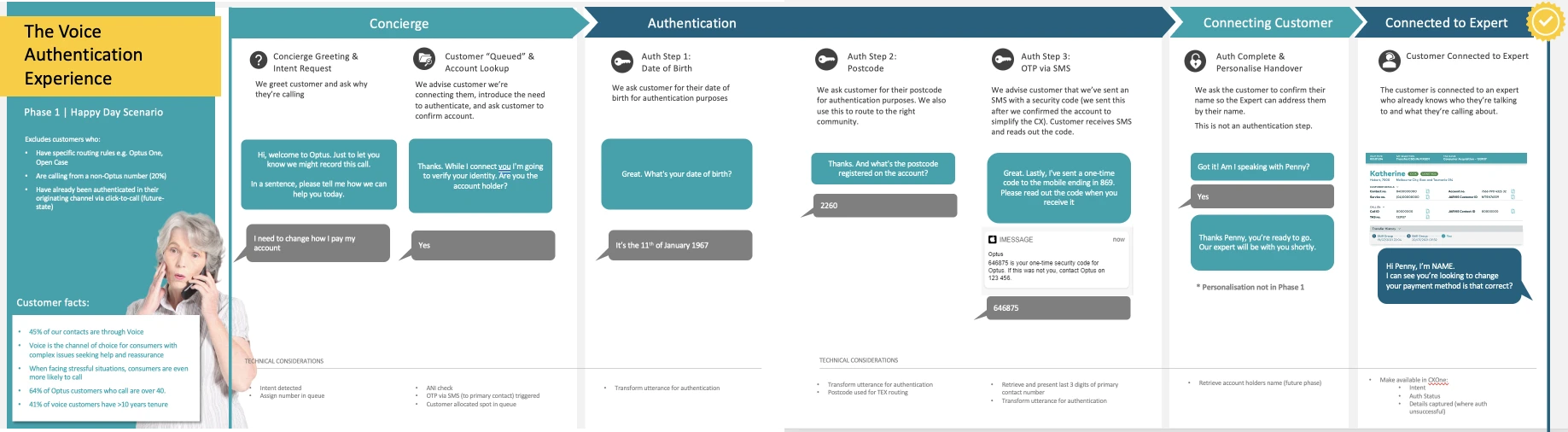
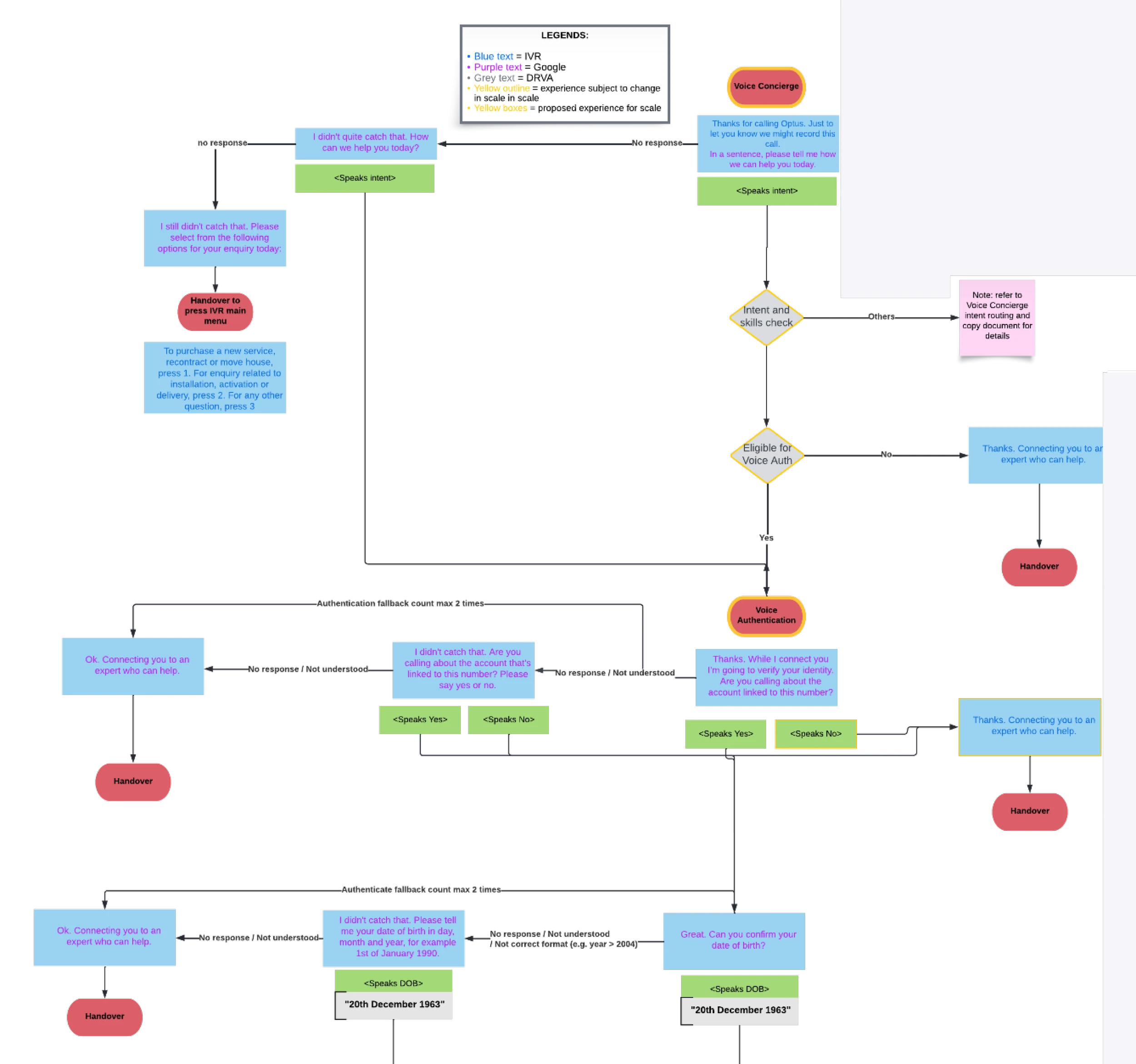
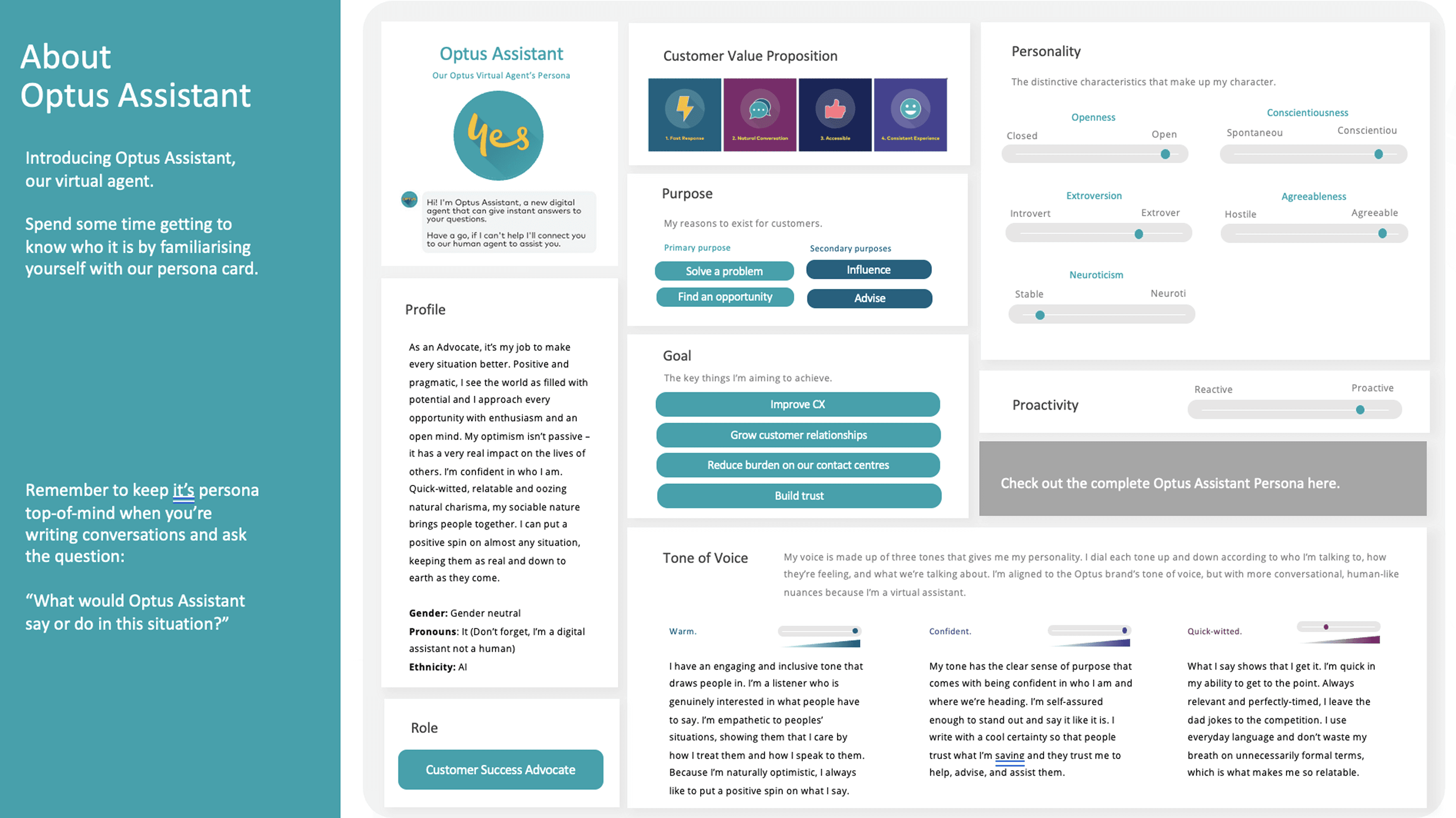
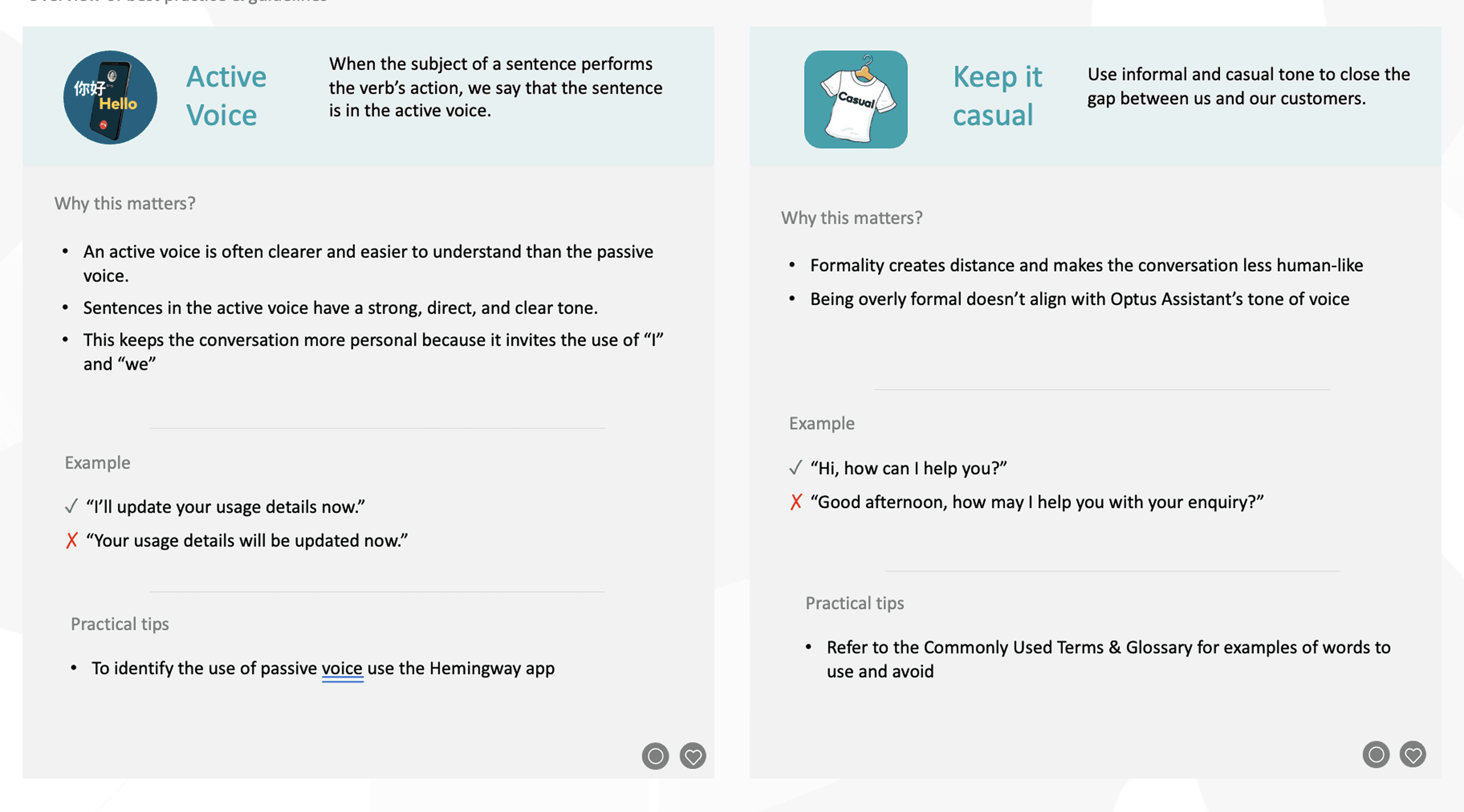
With my previous experience of creating a conversation design playbook, I kept in mind our tone of voice and principles such as "keep it casual" and "be direct". Every question and instruction should be short and sweet, but trustworthy, so users are comfortable to respond. I worked with engineers on different scenarios exploration and refine the content with other Google conversation designers to bring the experience to life.
Seamless handover
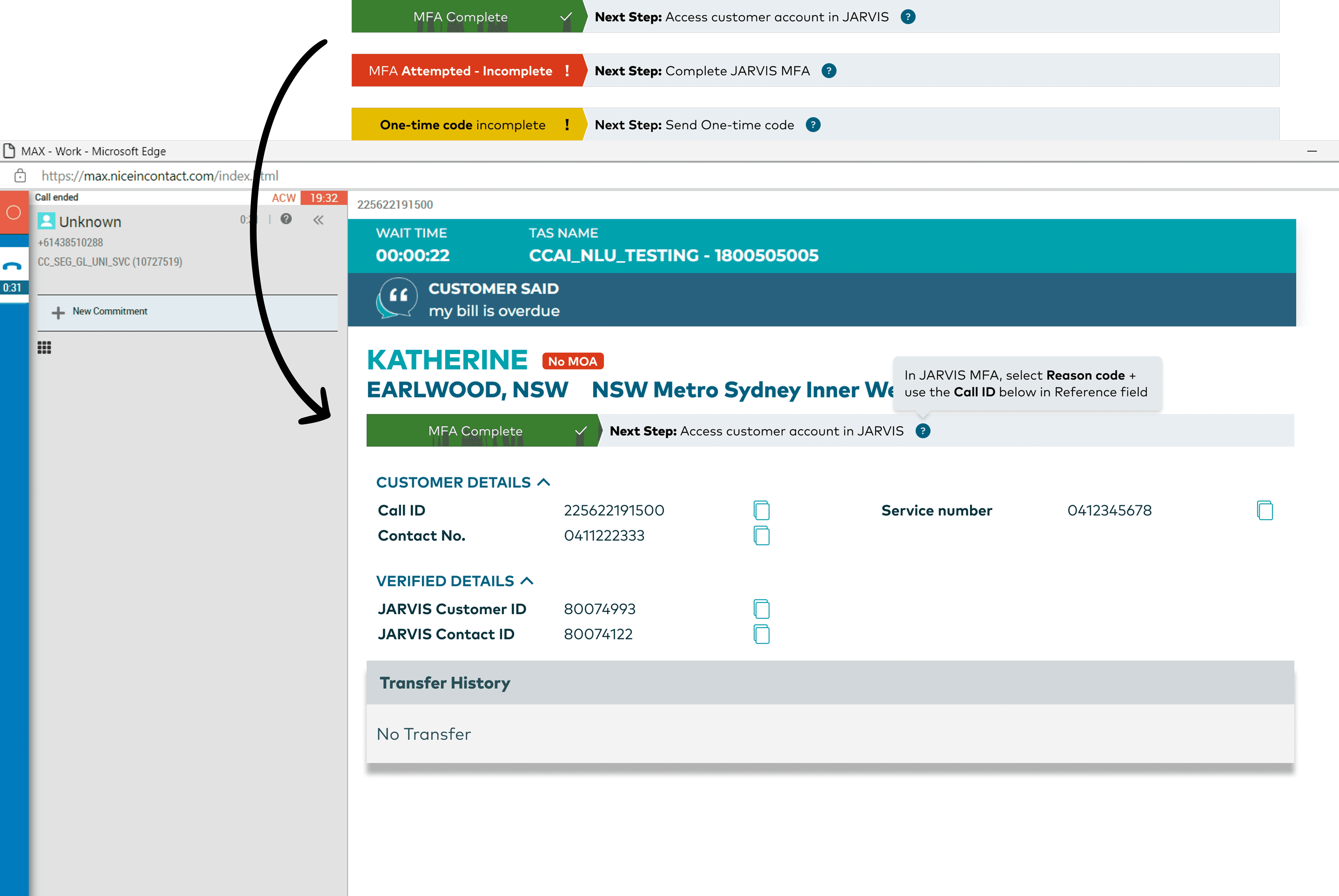
The key to time and cost saving in this experience is to ensure frontline experts can dive right into the customers' problem, without repeating authentication. I added the status of multi-factor authentication (MFA) in the frontline's dashboard, so the can see directly what has been done, and what they need to do next at a glance to save time.
Secured + time-saved
Since the launch, we've exceeded target authentication success rate by 15% and saving customers 67 seconds in the authentication process.
My learnings 🩷
Looking at the experience in full picture — not only the customer experience, but the frontline experience matters too, and that's where the business cost saving happens.
Setting design principles up-front helps the team in making decision and prevent discussions going in circle with Product and Engineers.